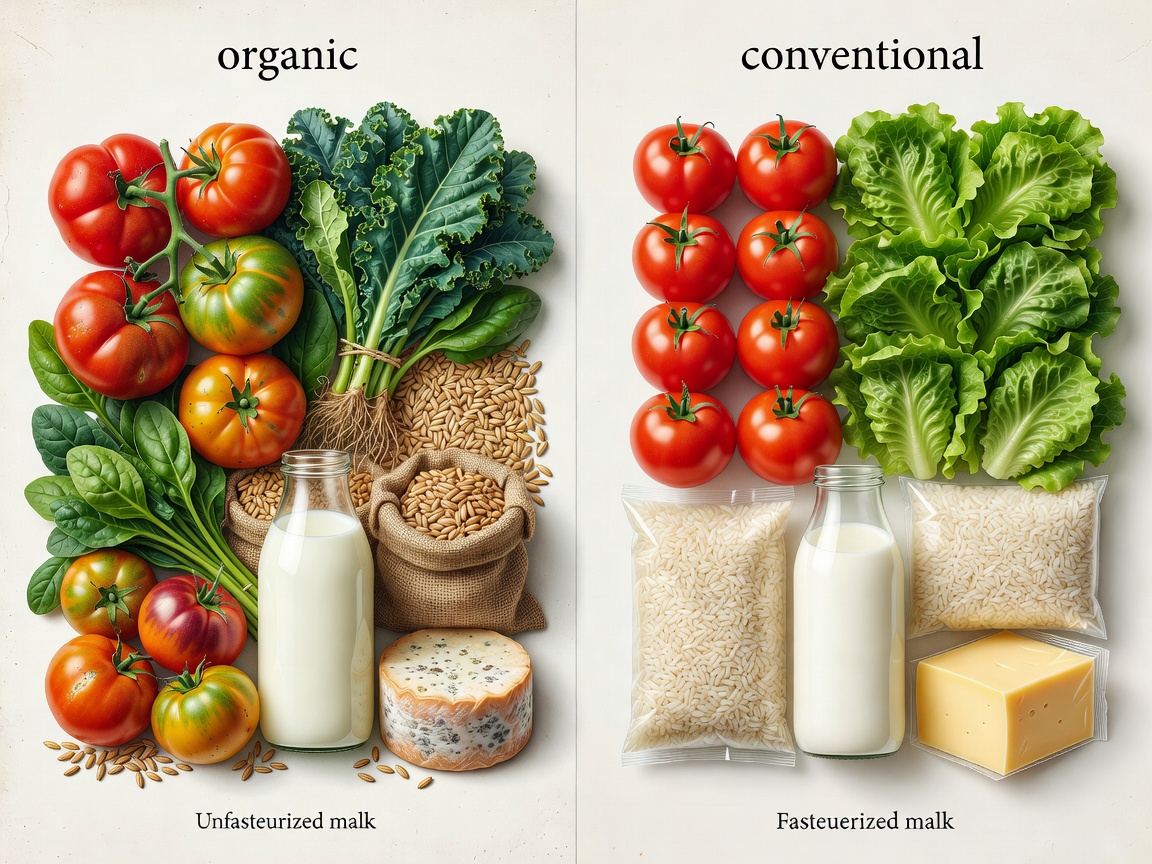
Healthier can mean several things
A shopper asking whether organic food is healthier may be asking about nutrients, pesticide residues, food poisoning, antibiotic use, additives or the long-term effect of an entire diet. These are different questions. A useful answer separates them rather than compressing them into one approving or disapproving verdict.
The NHS and Food Standards Agency emphasise the overall pattern of eating: variety, suitable energy intake, fruit and vegetables, fibre-rich foods and limits on foods high in salt, free sugars and saturated fat. Certification does not turn biscuits, sweets or crisps into nutritionally balanced foods. An organic ingredient list and a nutrition declaration perform different jobs.
Nutrient differences are usually modest and variable
Comparisons sometimes find differences in particular antioxidants, fatty acids or minerals between organic and conventional foods. Farming system can affect composition, but so can variety, ripeness, weather, soil, animal diet, storage and processing. These influences make it difficult to treat one average difference as a property of every item carrying the label.
A small compositional difference does not automatically create a meaningful health outcome. It must affect actual intake and matter in the context of the whole diet. Choosing a wider range of vegetables or replacing a refined snack with fruit may have a clearer nutritional rationale than changing between two versions of the same apple.
Residue exposure is not the same as hazard
Organic produce is generally less likely to contain residues from pesticides prohibited by organic standards. That can be a legitimate preference. It is still important to distinguish detection from risk. Laboratory methods can detect very small quantities. The presence of a residue does not by itself show that exposure exceeds a safety threshold.
The UK monitors pesticide residues through official programmes, while the European Food Safety Authority publishes European reporting. Maximum residue levels are legal trading limits based on authorised uses and assessment; they are not a dividing line where food instantly changes from safe to dangerous. Multiple residues also deserve monitoring and scientific assessment, but simply counting detected substances ignores concentration and toxicology.
Organic produce is not residue-free
Residues may arise from authorised organic products, environmental contamination, spray drift or handling within a complex supply chain. Certification systems require controls and investigation, but they cannot promise a chemically blank food. Washing fruit and vegetables under running water can remove soil and some surface contamination, although it does not remove every residue and is not a substitute for regulation.
Peeling may reduce some surface residues, but it also removes edible material and can reduce fibre or nutrients concentrated near the skin. The more balanced practice is to wash produce, handle it hygienically and follow official food-safety advice rather than discarding nutritious foods through fear.
Microbiological safety follows handling
Organic food is not inherently protected from bacteria, viruses or parasites. Manure must be managed carefully, but contamination can occur in any production system through soil, water, animals, equipment or people. Pasteurisation, refrigeration, cooking, clean preparation and avoidance of cross-contamination remain relevant regardless of the label.
The Food Standards Agency’s hygiene guidance applies to organic and conventional foods alike. Wash hands and preparation surfaces, keep raw foods separate where required, observe storage instructions and cook foods appropriately. People who are pregnant, older, immunocompromised or otherwise concerned about foodborne illness should use NHS or qualified clinical guidance for their circumstances.
Antibiotic policy has a broader public-health angle
Organic livestock standards restrict routine antibiotic use and emphasise prevention through husbandry, housing, stocking and breed choice. Responsible reduction matters because antimicrobial resistance is a major public-health concern. Yet sick animals must receive effective veterinary treatment. Withholding treatment would be a welfare failure, not a benefit.
Antibiotic stewardship is also practised in conventional agriculture under veterinary and legal controls. Organic certification provides one structured approach, but shoppers should not infer that conventional food contains unsafe antibiotic residues. Withdrawal periods and residue controls apply to marketed animal products.
Additives are restricted, not absent
Processed organic foods can contain authorised additives and processing aids. The permitted range is narrower, but the finished product still needs an ingredient list. “Organic” does not mean raw, minimally processed, allergen-free or free from added sugar. Allergen declarations remain essential for anyone managing an allergy.
Read the nutrition declaration for energy, fat, saturates, carbohydrate, sugars, protein and salt. Read the ingredient list for composition and allergens. Read the organic statement for production status. Treating those three sources as interchangeable is where much confusion begins.
A proportionate decision
If reducing exposure to many conventional pesticide residues is important to you, organic produce offers a regulated route. If budget limits how much fruit and vegetables you buy, conventional produce remains nutritionally valuable. Avoiding produce altogether because organic is unaffordable would usually work against general healthy-eating guidance.
There is uncertainty in long-term observational comparisons because people who choose organic food may differ in income, education, exercise and wider diet. Researchers can adjust for known differences, but not perfectly. The most defensible conclusion is therefore restrained: organic production changes some exposures and sometimes composition, while overall food choice, quantity, variety and handling remain central.