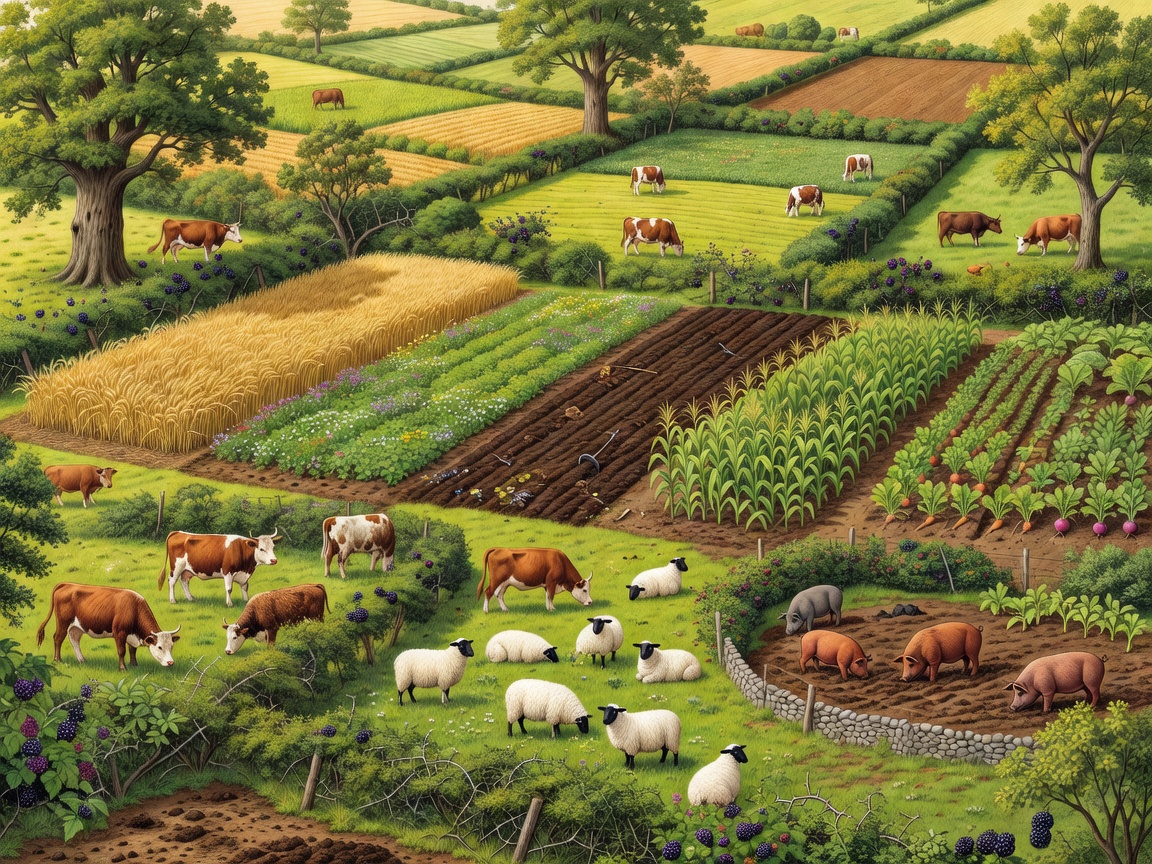
A regulated method, not a mood
In the United Kingdom, “organic” is a controlled description. Food sold with that claim must be produced and certified under applicable organic rules. In Great Britain, the legal framework retained from European Union regulation is supported by approved control bodies. Northern Ireland follows arrangements connected with EU organic rules. The practical point for shoppers is straightforward: organic is not merely a manufacturer’s synonym for natural, rustic or pesticide-free.
Control bodies inspect operators and review records. The Soil Association is the most familiar name to many shoppers, but it is not the only approved UK body. Other control bodies can certify legitimate organic food. A certification code on packaging is therefore more useful than relying on the visual style of a label.
Soil fertility is built differently
Organic crop production restricts readily soluble synthetic nitrogen fertilisers. Farmers commonly rely on crop rotations, legumes, composted materials, manures and careful nutrient planning. Legumes such as clover and field beans work with soil bacteria to fix atmospheric nitrogen. That nitrogen can support later crops, although its timing and availability are less precisely controlled than a bagged mineral fertiliser.
This creates a genuine benefit and a real constraint. Diverse rotations can interrupt some pest and disease cycles, spread workloads and add habitats. Returning organic matter can support soil structure and water movement. Yet nutrient supply may not match crop demand perfectly. Manure also needs responsible storage and application because nutrients can still be lost to air and water. “Natural” does not mean consequence-free.
Pesticide use is restricted, not erased
Organic standards prohibit many synthetic pesticides and allow a narrower set of plant-protection products under specified conditions. Farmers are expected to begin with prevention: rotation, resistant varieties, habitat for beneficial organisms, mechanical weeding and monitoring. This reduces dependence on many conventional chemical controls and can lower exposure of non-target organisms to particular substances.
However, the claim “grown without pesticides” is unreliable. Organic systems may use authorised substances, and those substances still have hazards, application limits and environmental effects. Copper compounds, for example, have long been used against fungal disease in some crops but can accumulate in soil. The analytical question is not whether an input sounds natural. It is how much is used, how persistent it is, what it affects and whether other controls could work.
Genetically modified organisms are excluded
Organic standards exclude the deliberate use of genetically modified organisms and products made from them, subject to practical rules around unavoidable traces. For shoppers who specifically wish to avoid GM production, certified organic status provides a regulated route. This is a preference benefit rather than proof that every non-GM crop has a smaller environmental footprint.
Genetic method and farming system are separate questions. A conventionally bred crop can require substantial intervention, while a genetically engineered trait can be designed around a particular agronomic problem. Organic rules settle the eligibility question; they do not settle every scientific debate about crop breeding.
Livestock rules cover more than feed
Organic livestock must receive organic feed and be managed under standards covering housing, access, stocking conditions, veterinary treatment and husbandry. The system places emphasis on opportunities for natural behaviour and on preventive health management. Routine use of antibiotics to compensate for poor management is not the model.
Animal welfare still depends on daily husbandry. A certification scheme sets minimum and system-specific requirements, but it cannot make weather, disease pressure or stockmanship identical across farms. Necessary veterinary treatment must not be withheld simply to preserve organic status. Withdrawal periods and certification consequences can apply, but animal health comes first.
Conversion creates a meaningful barrier
Land does not become organic immediately when prohibited inputs stop. A conversion period applies before produce can be marketed fully as organic. Records, inspections, approved inputs and segregation also add work throughout the supply chain. These controls make the label more credible, but they create costs and can discourage smaller businesses from entering certification even when some of their practices resemble organic methods.
The benefit is traceability within a defined scheme. The limitation is that certification is not a complete league table of farm quality. A thoughtful conventional grower may use integrated pest management, precision application and strong habitat measures. An organic operator can still make weak choices within the permitted range. The label identifies a governed production system; it does not replace curiosity about the particular food.
Where the benefit is clearest
Organic is most persuasive when a shopper values the combined package: restricted synthetic inputs, prohibition of GM use, rotation-led fertility and defined livestock standards. It is less persuasive as a shortcut for superior nutrition, low food miles or low carbon. Those outcomes need separate evidence.
When comparing two products, check the certification statement, origin, production method and season. Then ask what the organic premium is buying in that category. For eggs or dairy, husbandry may dominate the decision. For field vegetables, pesticide and fertility practice may matter more. For an imported, heated or heavily packaged product, transport, energy and waste remain visible parts of the ledger.