Look for regulated language
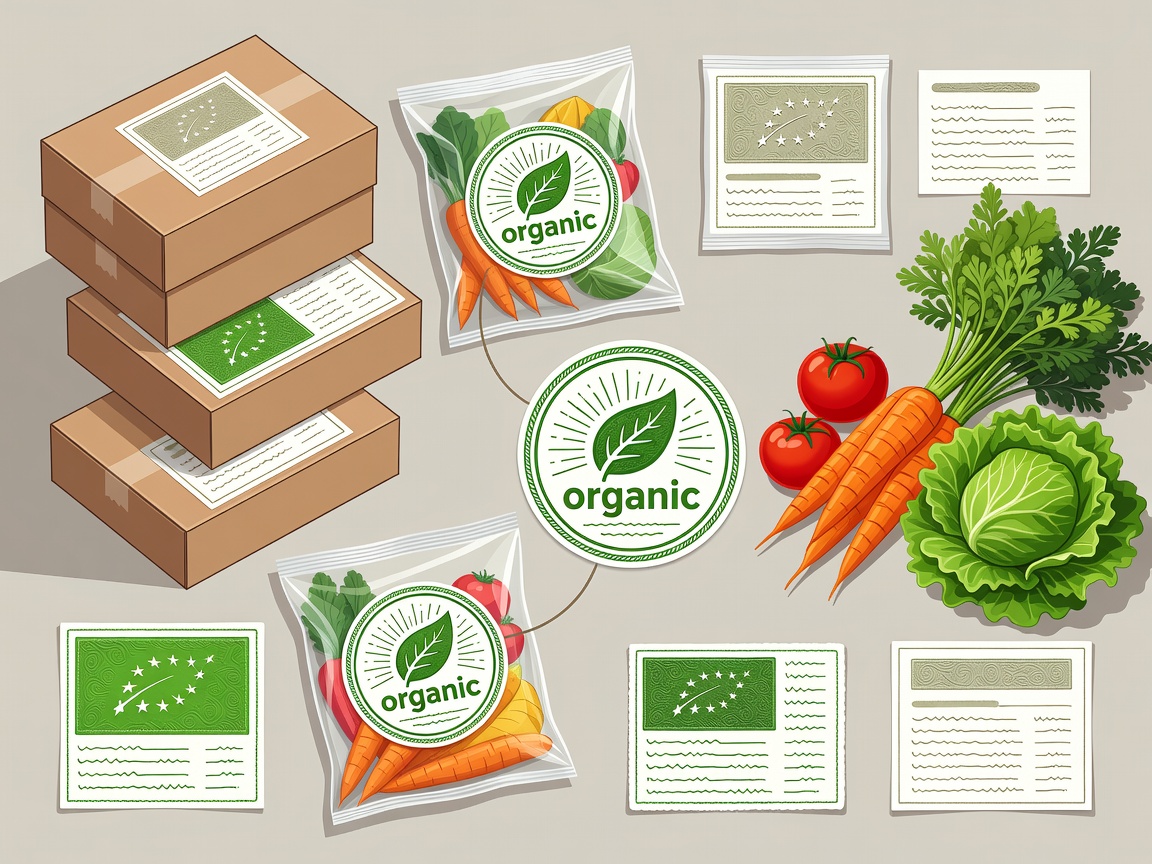
In the UK, organic is a legally controlled term for agricultural products and foods. A business using it must meet the relevant rules and participate in an approved control system, subject to limited situations such as direct sales of some loose products. Certification is the dividing line between a regulated production claim and general language about nature.
Words such as “farm fresh”, “pure”, “wholesome”, “regeneratively grown” or “responsibly sourced” may describe genuine efforts, but they do not automatically mean organic. Each needs its own evidence. A brown paper label, leaf drawing or photograph of a field is design, not certification.
Find the control-body code
Packaged organic food normally carries information identifying the control body responsible for certification. UK codes follow a structured format indicating country, organic production and the control body. The code is more significant than familiarity with one particular certification mark.
The Soil Association symbol is widely recognised, but other approved bodies certify organic operators. Absence of that specific symbol does not make a product invalid. Conversely, a decorative mark that resembles a seal should not be trusted unless the accompanying certification information is clear.
Understand the ingredient threshold
For a processed food to be described as organic in its sales name, at least 95% of its agricultural ingredients by weight must be organic under the standard rule. The remaining agricultural ingredients are constrained by the regulations. Organic ingredients should be identified in the ingredient list, often with an asterisk linked to a statement.
A product below that threshold may identify particular organic ingredients in the ingredient list, but it cannot present the whole food as organic in the same way. This distinction matters for mixed products. “Made with organic oats” is a claim about the oats, not necessarily the entire biscuit.
Read origin beside certification
Organic status answers how a product was produced under a standard. It does not answer how far it travelled. Country-of-origin information may appear on the package, while the organic labelling system can also include an indication of where agricultural raw materials were farmed.
Broad statements such as UK agriculture or non-UK agriculture are less precise than a named country, but they still help. For environmental comparison, ask whether the crop was field-grown or produced with significant heat, whether it is in season, and how perishable it is. Certification should not erase those questions.
Loose produce needs traceability too
Loose organic fruit and vegetables may not put a certification statement on every apple or carrot. Retail signs, shelf labels and the seller’s records should distinguish organic goods from conventional stock. Segregation matters because visually identical products can otherwise be mixed.
If the display is unclear, ask which certification body covers the seller or supplier. A confident retailer should be able to explain the claim without inventing a story about the farm. At farmers’ markets, knowing the producer does not itself replace certification when food is marketed as organic.
Do not confuse related labels
Free-range, higher-welfare, grass-fed, local, biodynamic, Fairtrade and organic address overlapping but different matters. Free-range describes aspects of animal access or housing under category-specific rules. Fairtrade focuses on trading standards and producer arrangements. Local refers to distance only if the seller defines it. Biodynamic certification includes organic requirements plus its own standards, but the terms are not interchangeable.
A product may carry more than one legitimate claim. Judge each claim on its own scope. An organic coffee can also be Fairtrade; one label concerns production standards and the other concerns a separate certification system. Neither automatically establishes low-carbon transport or recyclable packaging.
Compare the food, not just the badge
For minimally processed foods, compare origin, freshness, condition, unit price and likely waste. For packaged foods, add the ingredient list, nutrition declaration, allergens and pack size. An organic ready meal may contain more salt than another option; organic confectionery remains confectionery.
Check whether a retailer has placed organic and conventional products in different pack sizes. A lower-looking pack price can conceal a higher unit price, while a larger pack can create waste. The shelf-edge label often offers a clearer comparison than front-of-pack marketing.
Use a short decision sequence
First, decide why organic matters for this purchase: pesticide restrictions, livestock rules, GM avoidance or support for the whole production system. Second, confirm certification and identify which ingredients the claim covers. Third, compare origin, season, food type and packaging. Fourth, compare unit price and buy an amount likely to be used.
This sequence keeps the label useful without asking it to answer every question. Organic certification is meaningful because it governs production and handling. It is limited because nutrition, carbon, distance, worker conditions, packaging and flavour require additional information. A careful shopper can respect the standard without assigning it magical powers.